بسم الله الرحمن الرحيم
Answer to Question
Question:
The answer to a question dated April 12, 2014, stated the following: “China possesses a sense of strength and challenge, and if China’s objective is not limited only to maintain its territory, and accept to confront America only as a response to the movements of America towards its territory, China does not venture out to challenge America in their respective areas of influence... and if it did not begin to adopt capitalism in many areas, particularly in economy... it would have had a loud voice internationally, and its impact on the interests of America's would be most powerful. China in any case has a strong sense of force, and is working to maintain its region’s self-sovereignty, even if in its own territory…” Does China’s restriction of rare earth metal exports to America, its sale of US Treasury bonds, its modernization of its army, and its construction of the world’s largest military complex southwest of Beijing not indicate China’s liberation from its political perspective of being confined to its own territory and the expansion of this perspective to compete with America globally? May Allah (swt) reward you.
Answer:
To clarify the answer to the above questions, we review the following matters:
1- The People's Republic of China was founded in 1949 following Mao Zedong's victory after the power struggle between the Communist Party, led by Mao, and the Nationalist Party, led by Chiang Kai-shek, which was openly supported by the United States. Chiang Kai-shek’s Nationalist Party fled to Taiwan and declared itself the “Republic of China.” When Deng Xiaoping assumed leadership of the Chinese Communist Party in 1978, unlike Mao, he prioritized the economy over ideology. He established an economic model based on low wages and high exports, opened the doors to increased foreign investment, and subsequently created Special Economic Zones (SEZs) in eastern Chinese cities in 1979.
2- With Deng Xiaoping, China abandoned the communist ideology in its economy and foreign policy, and so on, and began to blend capitalism and communism in practice. Since 1980, over a period of 45 years, it has achieved extremely rapid economic growth and continues to do so. As of 2010, it had become the world’s second-largest economy after the United States, and it remains so. “Bank of America stated that China would be able to double its GDP by 2035 and surpass the United States as the world’s largest economy along the way... CBC Arabia, February 27, 2021.” This is the economic reality.
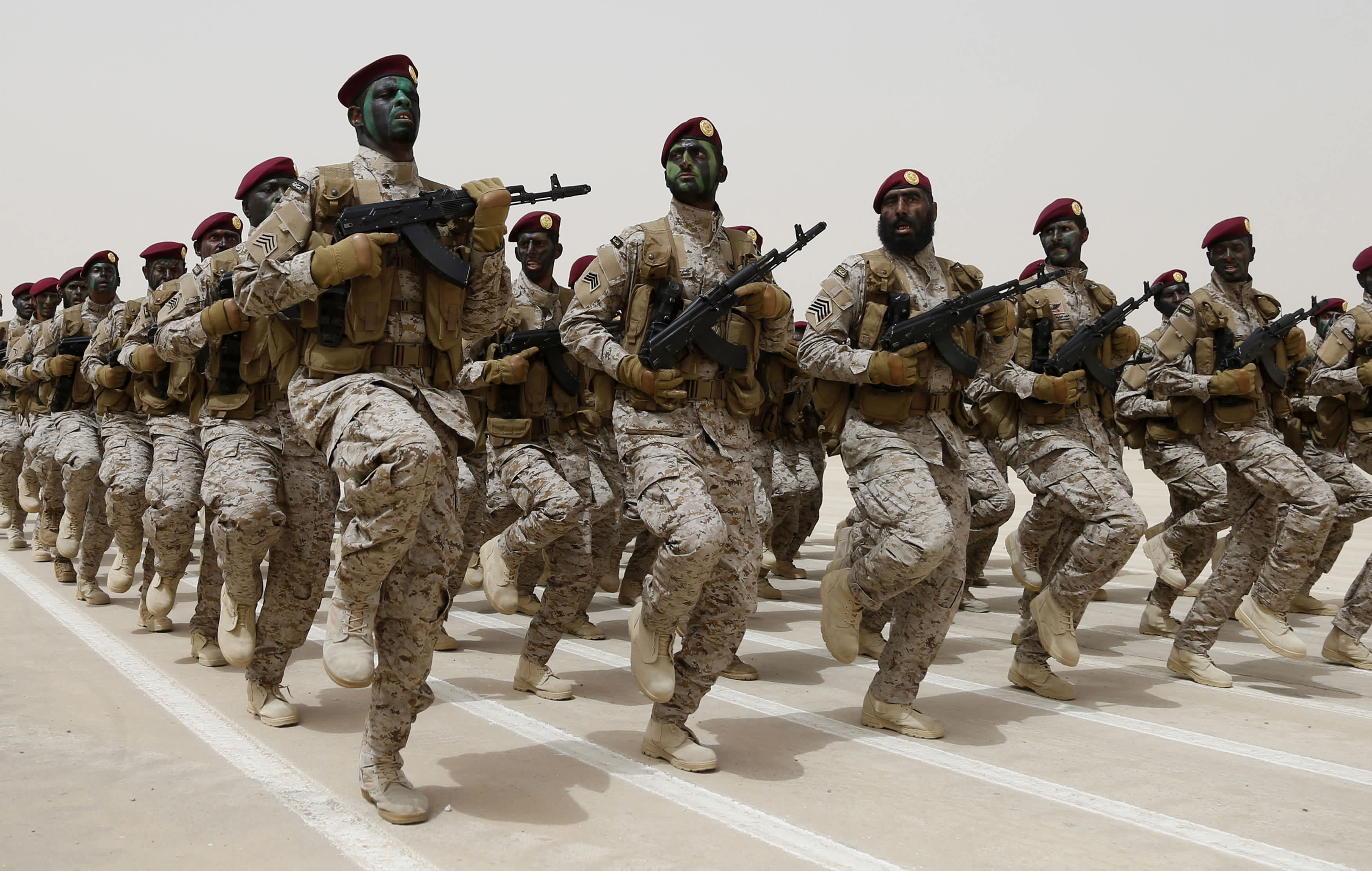
3- From a military standpoint, China is on the path to transforming this economic power into a military power, as it increases its military spending every year. China announced on Wednesday (05/03/2025) its intention to increase its national defence budget for 2025 by 7.2 percent, marking the tenth consecutive year of single-digit growth in the defence budget. The country’s planned defence spending will reach 1.784665 trillion yuan (approximately US$249 billion) this year... (Al-Arabi News, March 5, 2025). However, the Chinese military’s conventional and nuclear capabilities are also developing. A US Department of Defence report submitted to Congress on Wednesday (18/12/2024) stated that by mid-2024, China possessed more than 600 nuclear warheads, and by 2030, that number would exceed 1,000... (RT, December 18, 2024). China showcased its advanced weaponry in a military parade on September 3, 2025, commemorating the 80th anniversary of the victory over Japan in World War II. The extent of China’s military development was evident.
4- Politically, China is a major, independent regional power that does not orbit the United States, unlike other regional powers such as Japan and South Korea. It harbors political ambitions in the region, driven by nationalist motives and economic interests, even if not by ideological principles. The South China Sea is of vital importance to China, containing crucial maritime routes, fishing grounds, and indispensable subsea oil and gas reserves that fuel China’s ever-expanding manufacturing sector and economy. According to a 2013 report by the U.S. Energy Information Administration (EIA), the seabed holds an estimated 11 billion barrels of oil and 190 trillion cubic feet of natural gas reserves (EIA, April 13, 2013). Furthermore, over 80% of global trade passes through the South China Sea, representing approximately $5.3 trillion in traded goods (China Power, 2016). Therefore, China has a vested interest in this geopolitical and geostrategic region and asserts its rights to it.
5- America, acting as the world’s policeman, has sought, in accordance with its Asian strategy, to prevent and contain China’s rise. This has been done at times by transferring troops and equipment from Europe to the Pacific region, at other times by exploiting the Taiwan crisis, at still other times by using India, at yet other times by establishing military alliances with regional powers, such as the AUKUS (Australia, the United Kingdom, and the United States) and the QUAD (the United States, Australia, India, and Japan), and at still other times by waging trade wars against Chinese companies like Huawei. This is because, after the fall of the Soviet Union, America placed Islam as a fundamental “ideological” enemy and China as a state enemy at the top of its list of adversaries. While the wars in Iraq and Afghanistan delayed and slowed its conflict with China, after these wars, it focused its entire objective on China, particularly through trade wars.
6- After this clarification, we now move on to reviewing the answer to the question:
A- Regarding the export of rare earth minerals, China recognizes their importance, especially in advanced, technologically sophisticated industries. There are approximately 17 types of rare earth minerals used in more than 200 types of modern industries worldwide. They are also in demand in the military industries for aircraft, submarines, spacecraft, and drones. A high percentage of these minerals are mined in China. China has used the issue of these minerals as leverage against the United States to gain concessions in their trade war. This is precisely what happened. When Trump announced a gradual increase in tariffs on China, finally reaching 104% on April 8, 2025, China responded by announcing on October 9, 2025, restrictions on rare earth mineral exports to the United States. China possesses 49% of the world's rare earth reserves and accounts for 69% of annual global production. This is a case of action and reaction. Then, the action and reaction were repeated: Trump reduced tariffs to approximately 47%. Following his meeting with his Chinese counterpart in Busan, South Korea, on October 30, 2025, on the sidelines of the 32nd Asia-Pacific Economic Cooperation (APEC) summit, Trump stated as he departed on his plane, Air Force One, saying that “tariffs imposed by the United States on China will be reduced to 47% and all issues related to rare earth minerals have been resolved, and the agreement will last for one year with the possibility of extension.” (Al-Sharq Al-Awsat, Al-Araby Al-Jadeed, October 30, 2025). Therefore, China's restrictions on rare earth minerals do not signify a shift away from narrow-mindedness, but rather a reaction to the US decision to impose tariffs—a bargaining chip. This is evidenced by the fact that tariffs were reduced and restrictions on rare earth minerals were suspended for a year.
B- As for China selling part of its holdings of US Treasury bonds, which amounted to $1.189 trillion in October 2017. “China’s holdings of US Treasury bonds fell to their lowest level since 2009... Data published by the US Treasury Department on Tuesday (18/02/2025) showed that the value of US sovereign debt held by Chinese investors decreased by $57 billion to $759 billion in 2024, excluding Treasury bonds owned by the Chinese and held in accounts in other countries...” (Al Jazeera Net, 19/02/2025), this is also a decision taken as a defensive step aimed at reducing risks, rather than stemming from an ideological vision; as it is known that America and Europe, following the war launched by Russia on Ukraine in 2022, froze Russian assets worth $300 billion and used the SWIFT system as a weapon. Therefore, it is very likely that China converted these bonds into gold reserves to prevent America from freezing its assets (its finances) as it did with Russia, in the event of a possible attack on Taiwan or for any other reason such as trade wars. “Last year alone, China added several more tons of gold worth $550 billion to its reserves. Last month, the share of gold in China's official reserves rose to a record high of 4.9%...” (Artigercek.com, May 18, 2024). The claim that the decline in China’s assets is due to transferring some of them to securities depositories like Euroclear in Belgium and Clearstream in Luxembourg, as some experts allege, is unlikely. Even in this scenario, the assets that China fled from the US and transferred to Belgium and Luxembourg would be subject to freezing due to pressure exerted by the US on these countries. Therefore, gold remains the safest haven and is the preferred choice. This means that this move also does not indicate a change in China's narrow-mindedness, but rather can be considered a precautionary measure. China’s actions regarding rare earth elements and its sale of US Treasury bonds are a reaction to US actions, as stated in the previous answer: “confront America only as a response to the movements of America.”
C. Regarding the issue of China’s military modernization and the construction of the world's largest military complex southwest of Beijing, the Chinese military reaffirmed its commitment to achieving the centennial goals of the People's Liberation Army (PLA) by 2027, pledging to accelerate modernization efforts and enhance combat readiness. Wu Qian, spokesperson for the PLA and People's Armed Police Force delegation, emphasized that achieving the centennial goals and developing military capabilities is a strategic priority within China's broader efforts to modernize its national defense. Wu stated, “We must dedicate our efforts to ensuring that our goals are achieved with strong performance and on schedule.” (Defense-arabic.com, March 13, 2025). The Financial Times quoted current and former US officials as saying that the Chinese military is building a massive complex west of Beijing that US intelligence agencies believe will serve as a wartime command centre, significantly larger than the US Department of Defense (the Pentagon). The newspaper reported that satellite images it obtained show a construction site exceeding 4,000 square meters, located 30 kilometers southwest of Beijing. Beijing, where deep pits appear, which military experts estimate will house large, fortified bunkers to protect Chinese military leaders during any conflict, including potential nuclear wars... (Al Jazeera Net, 31/01/2025). Therefore, the modernization of the army, the construction of a massive command centre near Beijing (30 km away), the building of artificial islands in the South China Sea, and the rapid expansion of its naval fleet are merely a reaction to America’s deployment of 60% of its naval forces in the region. In other words, the construction of this military complex was not intended to engage in conflict with America in its former colonies and replace it, as America did when it entered into conflict to threaten its territory.
Neither Britain nor China sought to replace it in its colonies after World War II, nor did China modernize its army to expel America from its colonies, undermine its influence, and supplant it. Instead, these actions are related to preventing American hegemony in China’s regional sphere (it is content to maintain its own territory), meaning they are a reaction to the military buildup in the region.
7- In conclusion, China now possesses the material capabilities to become a global superpower. However, it appears that China has not yet dared to challenge the United States in its spheres of influence or in other regions. This is why it has not forcibly annexed Taiwan, as it had planned and threatened, especially after witnessing the sanctions imposed by the United States and Western countries on Russia following its invasion of Ukraine in 2002. China is therefore hesitant to challenge the United States in its spheres of influence and those of the West in Africa, Asia, and elsewhere. China has even abandoned its long-planned strategy of establishing military bases stretching from its Pacific coast to the Indian Ocean and into Africa, with the exception of its base in Djibouti. It did not take a firm and serious stance towards the American threats to its interests in Panama, as the latter succumbed to these threats and withdrew from the Chinese New Silk Road Agreement on 2/6/2025, which includes the issue of China's supervision of the Panama Canal. Instead, China is content with reacting to the moves of America close to it without initiating them. Therefore, what we mentioned in the answer to our previous question is still valid, as its regional emergence is clear and it is competing in it, but not a global emergence in which it is competing with America. However, this is until now, and it is not unlikely that new political and intellectual developments will occur that will push China to serious political action globally, especially as it is advancing militarily and economically.
8- In concluding, these countries, whether America or China or both, are competing in this world with nothing but evil surrounding them and their followers, and a false civilization whose people have not succeeded. As for what appears to them today in terms of elevation above the earth, it is due to the absence of a state that spreads goodness throughout the world, thus eliminating their evils and destroying their structure. And it will return, Allah willing; the Khilafah Rashidah (Rightly Guided Caliphate), which will remove them as it removed their likes before, the Persians and the Romans... The Islamic Ummah is a living, active Ummah, rapidly returning to its original path, the path Allah (swt) ordained for it, (كُنْتُمْ خَيْرَ أُمَّةٍ أُخْرِجَتْ لِلنَّاسِ تَأْمُرُونَ بِالْمَعْرُوفِ وَتَنْهَوْنَ عَنِ الْمُنْكَرِ وَتُؤْمِنُونَ بِاللَّه) “You are the best Ummah produced for mankind. You enjoin what is right and forbid what is wrong and believe in Allah.” [TMQ Surah Aali Imran 110] Furthermore, within the Ummah is a Hizb sincere to Allah (swt), truthful to His Messenger (saw), striving tirelessly, day and night, until the promise of Allah (swt and the glad tidings of His Messenger (saw) are fulfilled through its shebaab. They fear no blame in the cause of Allah (swt), their resolve unwavering, their determination unyielding, by the permission of Allah (swt), until the promise of Allah (swt) is fulfilled through them, and the Khilafah Rashidah (Rightly Guided Caliphate) returns, fulfilling the promise of Allah (swt) and the glad tidings of His Messenger (saw), and Rome is conquered at the hands of the Muslims, just as Constantinople was conquered before. Ahmad narrated in his Musnad, on the authority of Abdullah ibn Amr ibn al-As, who said, بَيْنَمَا نَحْنُ حَوْلَ رَسُولِ اللَّهِ ﷺ نَكْتُبُ إِذْ سُئِلَ رَسُولُ اللَّهِ ﷺ، أَيُّ الْمَدِينَتَيْنِ تُفْتَحُ أَوَّلاً قُسْطَنْطِينِيَّةُ أَوْ رُومِيَّةُ؟ فَقَالَ رَسُولُ اللَّهِ ﷺ، «مَدِينَةُ هِرَقْلَ تُفْتَحُ أَوَّلاً يَعْنِي قُسْطَنْطِينِيَّةَ» “While we were around the Messenger of Allah (saw) writing, the Messenger of Allah (saw) was asked: Which of the two cities will be conquered first, Constantinople or Rome? The Messenger of Allah (saw) said, “The city of Heraclius will be conquered first, meaning Constantinople.”
(وَيَوْمَئِذٍ يَفْرَحُ الْمُؤْمِنُونَ * بِنَصْرِ اللَّهِ يَنْصُرُ مَنْ يَشَاءُ وَهُوَ الْعَزِيزُ الرَّحِيمُ)
“And on that day the believers will rejoice * in the victory granted by Allah. He grants victory to whom He wills, and He is the Exalted in Might, the Merciful.” [TMQ Surah Ar-Rum 4-5]
1 Jumada al-Akhirah 1447 AH
22/11/2025 CE