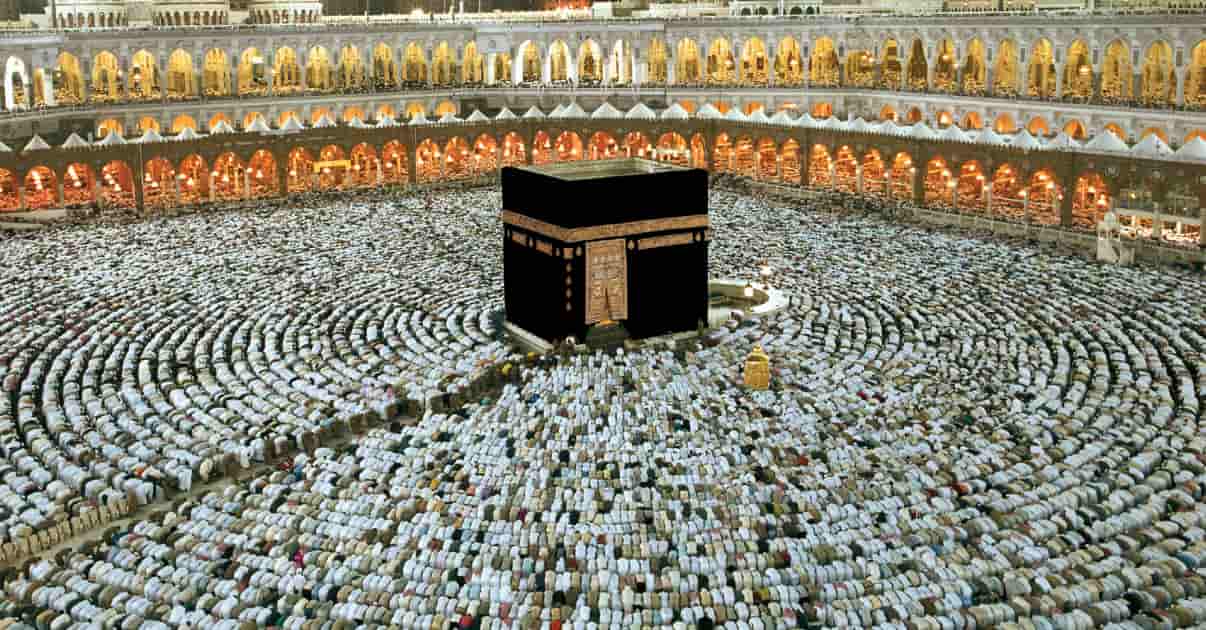
Each year, approximately two million Muslims from across the globe converge upon a sacred stretch of land to perform one of history's most extraordinary acts of collective worship: Hajj. They arrive wearing the same white garments, chanting the same words, and performing the same rituals - a living testament to a Deen that transcends nationality, language, culture, and social standing. Their singular purpose: the worship of Allah سبحانه وتعالى.
Hajj stands as a profound act of purification much like the five daily prayers which serve to cleanse, reconnect, and strengthen one's relationship with Allah سبحانه وتعالى. The Prophet ﷺ said:
"Whoever performs Hajj for the sake of Allah and does not commit any obscenity (rafath) or wrongdoing (fusooq) will return free of sin, just as he was on the day his mother gave birth to him." (Sahih Bukhari)
Beyond this immense spiritual reward, Hajj serves as an annual renewal of core Islamic values, none more powerfully embodied than unity and sacrifice.
Unity: The Strength of an Ummah
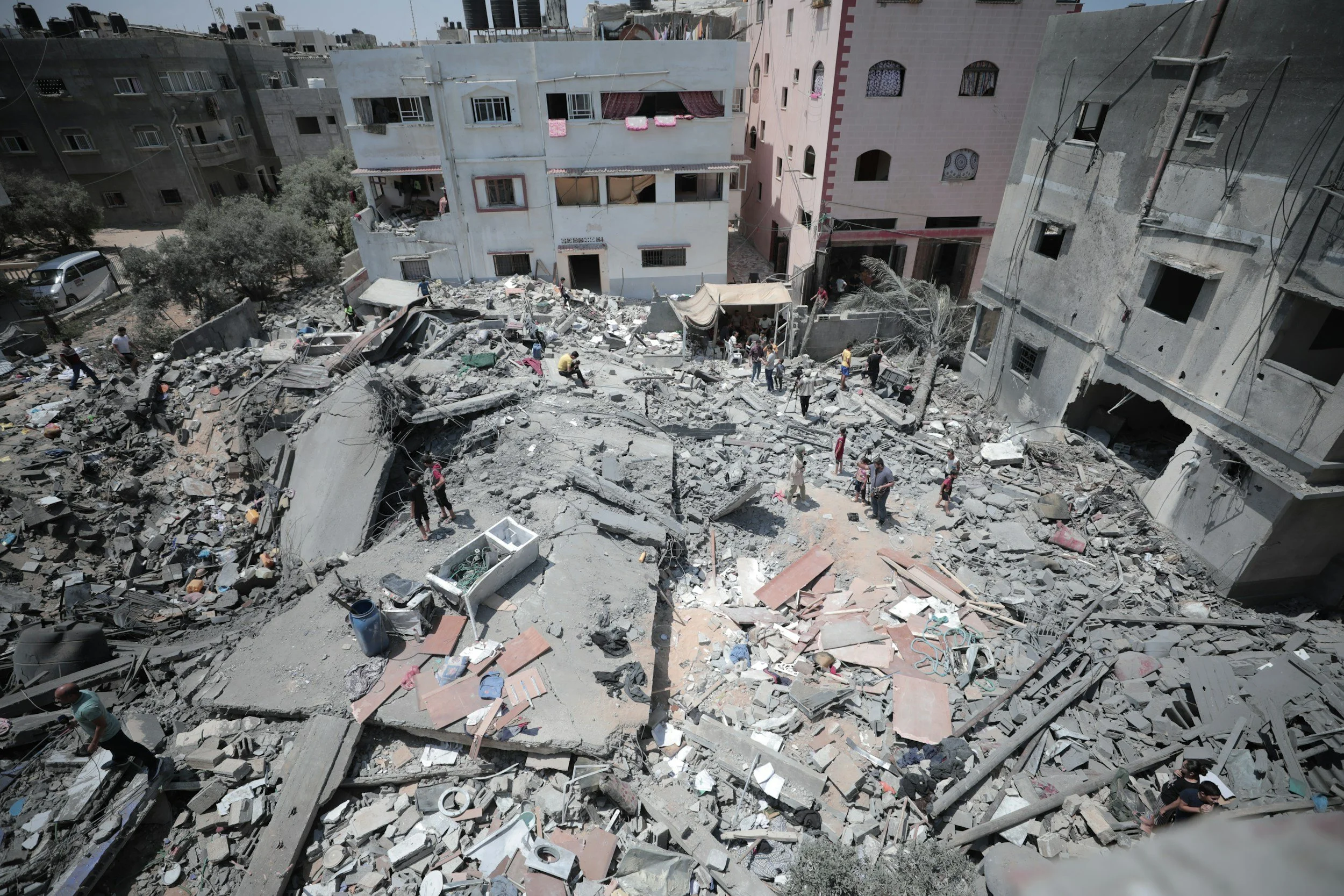
At a time when the Muslim world faces relentless colonialism, massacres, and nationalism that has fragmented much of the Muslim Ummah, Hajj arrives each year as a timely reminder that Muslim unity is an obligation and what our unity truly can look like. To witness the pilgrimage - even from a distance - is to witness something remarkable: millions moving as one, in discipline, in devotion, in collective purpose.
In many ways, the gathering resembles a vast assembly of strength and synchronization - a visible demonstration that when Muslims unite under one Talbiya Labbaik Allahumma Labbaik and one purpose, the result is awe-inspiring.
The Prophet ﷺ once described a time when the Muslim Ummah would be great in number yet weak "like the foam of the sea." Much of the weakness experienced by the Ummah today is rooted in political division: an Ummah spread across 57 nation states each with separate governments, armies, and foreign policies.
But consider the potential of a united Muslim world:
• Geographic Reach: The combined territory of Muslim countries spans approximately 12 million square miles making it nearly twice the size of Russia, more than three times the size of the United States, and constituting approximately 21% of the world's total land area. Such geographic breadth would offer extraordinary advantages in renewable energy production - solar, wind, and beyond - with the potential to form the largest and most cost-effective clean energy network in the world.
• Agricultural Abundance: This vast and ecologically diverse land would support the cultivation of virtually every major crop on earth. The halal livestock population across Muslim-majority lands would represent a substantial share of the global supply forming a critical pillar of both food security and economic production.
• A Young and Dynamic Population: The global Muslim population stands at approximately 2 billion people, representing nearly 26% of the world's population, with a median age of roughly 24 years. This would constitute the world's largest workforce and one of its most dynamic engines of economic productivity.
• Strategic Maritime Influence: Muslim countries border five of the seven major global oil transit chokepoints as identified by the U.S. Energy Information Administration including the Strait of Hormuz, the Bab el-Mandeb, the Suez Canal, the Strait of Malacca, and the Bosporus. Influence over these critical waterways would provide enormous financial and geopolitical advantages.
• Energy Dominance: Muslim countries hold a commanding share of approximately 60-65% of global proven oil reserves making the Muslim world a decisive force in global energy markets. Additionally, Muslim territories hold vast deposits of raw materials and rare earth minerals giving us the ability to dominate both the production and export of these critical resources
• Military Potential: A unified Ummah would command one of the largest military forces in the world, with an estimated combined active and reserve personnel of 20–25 million.
Sacrifice: The Heart of Hajj
Sacrifice is the second great value exemplified through Hajj and it runs through the pilgrimage from beginning to end. The tradition of sacrifice in Islam traces back to Prophet Ibrahim عليه السلام, who demonstrated the highest form of devotion: a willingness to sacrifice his beloved son after decades of waiting for a child; to leave his wife Hajar and their newborn in a barren desert valley, trusting entirely in Allah's provision; and to abandon comfort, family, and certainty for the sake of obedience to his Lord.
The sacrifices of Hajj begin long before reaching Makkah. Pilgrims leave behind their businesses, livelihoods, and families. Hajj costs vary widely by country of origin, nonetheless, it is a significant financial undertaking that is itself an act of devotion. Upon arrival, the sacrifices continue. Pilgrims perform Tawaf around the Ka'bah in scorching heat, driven by nothing but love for Allah سبحانه وتعالى. After the completion of Hajj, pilgrims sacrifice an animal and shave or trim their hair - outward acts that mark an inward renewal.
Muslims should never hesitate to sacrifice when it becomes necessary, particularly when the call is for the sake of Allah سبحانه وتعالى and in pursuit of His pleasure. As the great event of Hajj approaches, we are called to remember the sacrifices of those who came before us: the Prophet ﷺ who endured a three-year economic and social boycott; Sumayyah رضي الله عنها among the first martyrs of Islam; the Companions who stood firm against an army of 10,000 at the Battle of the Trench; and Abu Ayyub al-Ansari رضي الله عنه, who passed away during the siege of Constantinople, his final wish being to be buried as close as possible to the city's walls in his pursuit of spreading Islam's light.
The examples are countless. The mission they carried to establish the Deen of Allah سبحانه وتعالى and spread justice through divine guidance did not end with them.
It continues with us. And if that mission is to be fulfilled, it will require sacrifice of the same magnitude.
The political disunity that has crippled the Ummah for generations will not dissolve without sacrifice. The artificial borders drawn by colonial powers - borders that carved a single Ummah into 57 competing nations, pitting Muslim against Muslim and weakening us all - will not fall without sacrifice. The tyrant rulers who have traded the welfare of their people for personal power and foreign favor, who have suppressed the Deen and silenced those who speak truth, will not be removed without sacrifice. And the establishment of divine rule, a Khilafah (Caliphate) - governance rooted not in the whims of humans but in the justice of Allah سبحانه وتعالى - will not come without sacrifice.
This is not a distant dream. It is a divine promise. History bears witness that when the Ummah has sacrificed with sincerity, when it has placed the pleasure of Allah سبحانه وتعالى above comfort, security, and self-interest then empires have fallen, tyranny has crumbled, and the light of Islam has prevailed.
Hajj is the annual reminder that we were never meant to be divided. We were meant to be one - one Allah سبحانه وتعالى, one Deen, one Ummah. The path back to that unity runs through the same place it always has: sacrifice.
The Path Forward
The questions worth reflecting upon are: What if the Muslim Ummah were to politically unite, as it does spiritually at Hajj each year? Is the Ummah capable of unity and independence? Are we willing to unite and sacrifice?
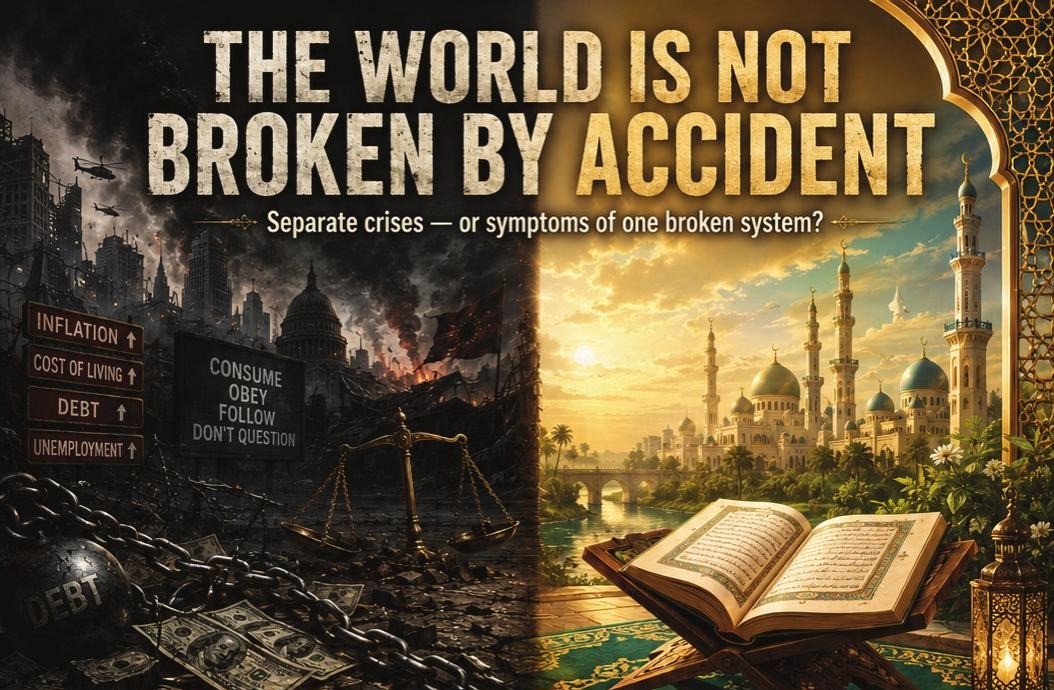
The answer is unambiguous: the Ummah possesses every resource, every demographic advantage, and every geographic asset required to build a modern, sovereign, and prosperous state - one that harnesses its vast potential to establish governance that pleases Allah سبحانه وتعالى and His Messenger ﷺ. Under a system of justice rooted in divine revelation, oppression would find no sanctuary, and no violation of Muslim life, honor, wealth, or dignity would be permitted to go unanswered. Such a state would present Islam to the non-Muslim world through the undeniable contrast between the justice and integrity of Islamic governance and the greed, inequality, and moral decay that define the prevailing capitalist secular order.
The path forward is not merely political reform or economic development - it is the resumption of an Islamic way of life in its fullness, and the re-establishment of unified Islamic governance upon the prophetic methodology: a Khilafah (Caliphate) that unites the Ummah, restores its dignity, and positions it once again as what Allah سبحانه وتعالى declared it to be - the best nation brought forth for mankind.
This is not nostalgia nor utopia. It is an obligation, a prophecy, and a promise.
The Ummah must rise - in sacrifice, in sincerity, and in the unwavering pursuit of Allah's pleasure. The victory of this world and the reward of the Hereafter await those who answer the call.
وَعَدَ ٱللَّهُ ٱلَّذِينَ ءَامَنُوا۟ مِنكُمْ وَعَمِلُوا۟ ٱلصَّـٰلِحَـٰتِ لَيَسْتَخْلِفَنَّهُمْ فِى ٱلْأَرْضِ كَمَا ٱسْتَخْلَفَ ٱلَّذِينَ مِن قَبْلِهِمْ وَلَيُمَكِّنَنَّ لَهُمْ دِينَهُمُ ٱلَّذِى ٱرْتَضَىٰ لَهُمْ وَلَيُبَدِّلَنَّهُم مِّنۢ بَعْدِ خَوْفِهِمْ أَمْنًۭا ۚ يَعْبُدُونَنِى لَا يُشْرِكُونَ بِى شَيْـًۭٔا ۚ وَمَن كَفَرَ بَعْدَ ذَٰلِكَ فَأُو۟لَـٰٓئِكَ هُمُ ٱلْفَـٰسِقُونَ
Allah has promised those among you who believe and do righteous deeds that He will surely grant them succession (to authority) upon the earth, just as He granted it to those before them, and that He will surely establish for them their religion which He has approved for them, and that He will surely substitute for them, after their fear, security - for they worship Me, not associating anything with Me. But whoever disbelieves after this promise, it is they who are the rebellious. [An-Nur: 55]
Hizb ut Tahrir America
May 11, 2026 / 24 Dhul al-Qidah, 1447