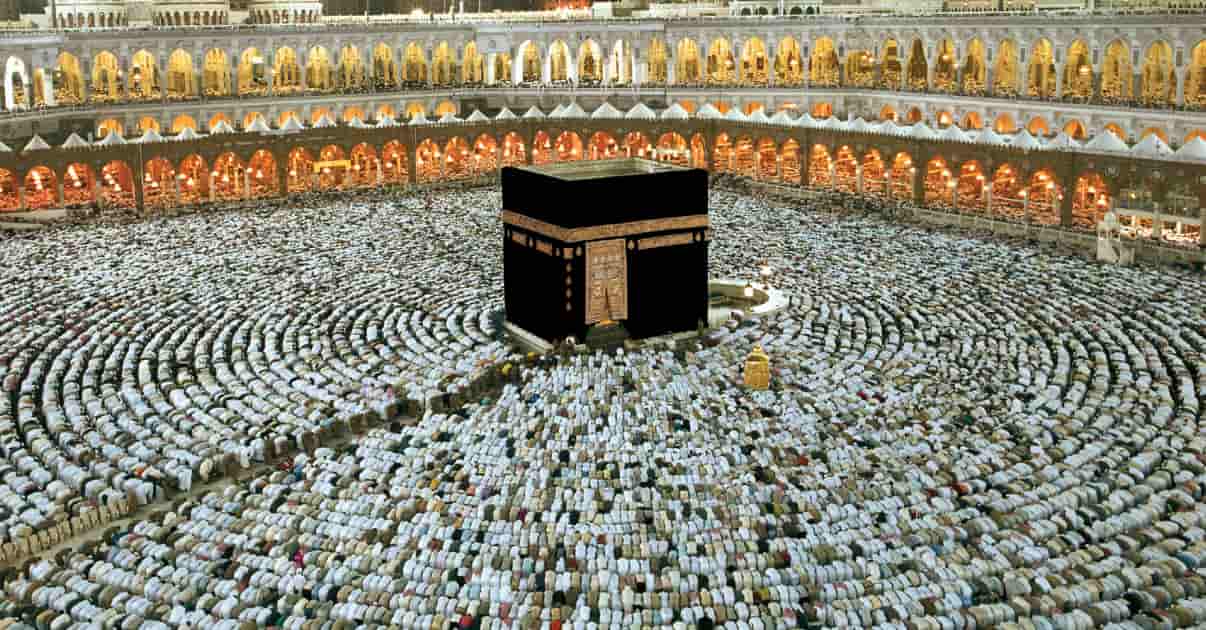
As Muslims eagerly await the arrival of the glorious month of Ramadan, seeking its bounties and drawing closer to Allah (ﷻ), it may be yet another year in which Ramadan enters and leaves while we remain divided. The pain of being fragmented as an Ummah by artificial political borders and nationalism, imposed by colonial powers through the destruction of the Khilafah (Caliphate) is constantly felt. Another painful reminder of this division is the differences that arises over the sighting of the moon for the commencement and end of Ramadan.
From a time when Muslims globally started and ended Ramadan together by awaiting the announcement of the Khaleefah, today we sadly differ, aligning instead with particular Masajid, countries, or various arguments over how it should be determined. This is yet another sad reminder of the impact of the absence of the Khilafah.
The obligation to begin Ramadan and Eid is based on sighting:
The Prophet (ﷺ) said: «إِنَّمَا الشَّهْرُ تِسْعٌ وَعِشْرُونَ فَلاَ تَصُومُوا حَتَّى تَرَوْهُ وَلاَ تُفْطِرُوا حَتَّى تَرَوْهُ فَإِنْ غُمَّ عَلَيْكُمْ فَاقْدِرُوا لَهُ»“The month of Ramadan may consist of twenty-nine days. So do not fast until you have sighted it (the new moon) and do not break fasting, until you have sighted it (the new moon of Shawwal), and if the sky is cloudy for you, then complete it (thirty days).” [Muslim]
Though scientific techniques can be used to determine the birth and location of the moon (similar to the location of the sun in determining prayer times), the Shari’ah has specified the visible sighting by the eye (and what aids it e.g. spectacles, telescope) to be the requirement to determine the start and end of Ramadan.
In addition to the Hadith mentioned above, there are numerous clear and unequivocal authentic Ahadith on this topic, where the Messenger of Allah (ﷺ) orders us to start and stop fasting by the confirmed sighting of the new moon. These orders are binding and their violation is a sinful act just like the abandoning of any other obligation.
Using calculations to determine beginning or end of Ramadan is invalid:
Despite some who allow calculations, we cannot substitute the actual sighting of the moon, as the aforementioned texts mention “رُؤْيَتِهِ” (sighting) specifically. All these Ahadith connected to the sighting of the moon contain this Arabic word “رُؤْيَتِهِ” which is derived from the word “رأى”. People who support the idea of calculating the birth of the moon for Ramadan misuse the word “رأى”. While the word “رأى” could mean knowledge, it is not correct to apply this meaning here because of the following reasons:
1. The word “رأى”, when referring to a single object, means to visualize that object through the eye, i.e. he saw the moon. However, if “رأى” refers to two objects, it could mean to know, i.e. he knew the correct opinion.
2. If “رأى” is used in reference to a tangible object, it means to visualize the object through the eye. However, if it is used to present an idea or an abstract thing, then it could mean knowledge. Thus, since the Ahadith refer to the moon, which is a tangible object, “رأى” here means to visualize sight.
A Hadith that is incorrectly used as evidence to use calculations is:
Umar (ra) reported that the Prophet (ﷺ) said: «إِنَّا أُمَّةٌ أُمِّيَّةٌ، لَا نَكْتُبُ وَلَا نَحْسُبُ، الشَّهْرُ هَكَذَا وَهَكَذَا، يَعْنِي مَرَّةً تِسْعَةً وَعِشْرِينَ، وَمَرَّةً ثَلَاثِينَ»“We are “امية” (unlettered) people, we neither write nor calculate. The month is this way and that, sometimes 29 days and sometimes 30.” [Bukhari]
The supporters of calculation build their argument by suggesting that sighting the moon, is accompanied by a reason (‘Illah) that the Ummah was unlettered «لَا نَكْتُبُ وَلَا نَحْسُبُ»“We neither write nor calculate” which justifies the command. Since the Ummah has emerged from its “unlettered state” and is able to write and calculate, it becomes essential to rely on calculation alone. However, this argument is incorrect due to the following:
1. The word “امية” does not imply an ‘Illah (legal reason) in the Hadith. The word “امية” is also used to refer “Arab” as in Surah Al-Jumu’a ayah 2: [هُوَ الَّذِي بَعَثَ فِي الْأُمِّيِّينَ رَسُولًا مِّنْهُمْ يَتْلُو عَلَيْهِمْ آيَاتِهِ]
“It is He who has sent among the unlettered a Messenger from themselves reciting to them His verses.” “We neither نكتب (write) nor نحسب (calculate)…” “نحسب” in the Hadith carries several meanings such as: we do not use astronomical calculations to determine the legal Shari’i beginning and end of the month, nor do we practice astrology, etc. “نحسب” does not mean general calculations because Muslims are commanded by the Shar’iah to follow the laws of Zakah and inheritance that involve extensive calculations.
2. Furthermore, even if this “condition” is considered an ‘Illah (reason), Qiyas (analogy) on this issue is invalid. Firstly, there can be no Qiyas in Ibadaat (ritual worships). Secondly, it contradicts the definite meaning in texts of the numerous Ahadith which clearly illustrate that the “Sabab” (cause) for fasting is the sighting of the moon (like the setting of the sun is the Sabab for Maghrib prayer).
Therefore, it is quite clear that the arguments presented to justify the beginning of Ramadan through the use of calculations are invalid and haram. The only way to determine the arrival of Ramadan is through sighting the moon.
Local or Global Sighting?
The Prophet (ﷺ) said: «صُومُوا لِرُؤْيَتِهِ وَأَفْطِرُوا لِرُؤْيَتِهِ»“Fast upon its (the crescent moon) sighting and break the fast upon its sighting.” [an-Nisa’i]
The address in the Hadith text has plural word “رُؤْيَتِهِ” (sighting). There is no consideration for geography or distance - since any part of the world shares the same day and night, albeit at different times. Therefore, the command of fasting and of breaking the fast when the new moon is sighted is a command which addresses all Muslims all over the world.
It was reported from a group of the Ansar (ra), «غُمَّ عَلَيْنَا هِلَالُ شَوَّالٍ فَأَصْبَحْنَا صِيَامًا، فَجَاءَ رَكْبٌ مِنْ آخِرِ النَّهَارِ فَشَهِدُوا عِنْدَ رَسُولِ اللَّهِ صَلَّى اللَّهُ عَلَيْهِ وَسَلَّمَ أَنَّهُمْ رَأَوْا الْهِلَالَ بِالْأَمْسِ، فَأَمَرَ رَسُولُ اللَّهِ صَلَّى اللَّهُ عَلَيْهِ وَسَلَّمَ أَنْ يُفْطِرُوا مِنْ يَوْمِهِمْ، وَأَنْ يَخْرُجُوا لِعِيدِهِمْ مِنْ الْغَدِ» “The crescent of Shawwal was hidden from us (by clouds) so we arose the next morning fasting. Then a caravan from outside Madinah arrived towards the end of the day and the people in it witnessed to the Prophet (ﷺ) that they had seen the crescent yesterday, so he (ﷺ) commanded us to break our fast and to gather for Eid the following morning.” [Ahmad]
As for the opinion of Abdullah Ibn Abbas (ra) who rejected the sighting of Al-Sham conveyed to him by Kurayb, who had travelled to Al-Sham from Madina and upon his return reported the sighting to Ibn Abbas (ra), the majority of scholars responded to this by explaining that this was the Ijtihad of Ibn Abbas (ra). It is known that the Ijtihad of a Sahabi does not specify the generality of Qur’an or Sunnah. Moreover, this Ijtihad contravenes evidences mentioned above. Indeed, RasulAllah (ﷺ) accepted the sighting of the travelers who came to Madinah from elsewhere. Some scholars argue that Ibn Abbas (ra) did not accept Kurayb’s testimony because to declare Eid two witnesses were needed. Ibn Abbas (ra) himself has narrated several Ahadith that use general words for sighting. So it is obligatory upon all Muslims to start Ramadan together and celebrate Eid together. The sighting by any Muslim, anywhere in the world, of the crescent for the start of Ramadan and Shawwal is legally binding upon all Muslims.
Even the scholars, who take this semblance of evidence (شبهة الدليل) of the narration of Kurayb, define the Matl’a (horizon) with regards to the Moon differ on the distance after which a new Matl’a starts. Some scholars take the distance after which qasar (shortening) of prayer becomes allowed (a maximum of 72 miles as per one opinion), while others consider a month’s journey (500 or 600 miles) as the extent of a Matl’a. These distances prevent the possibility of using current political boundaries as a single Matl’a. Interestingly, the primary evidence used for local sighting, the narration of Kurayb, suggests a different Matl’a within the political boundaries of the Khilafah state. To summarize, the local sighting is a weaker opinion and more importantly its current application does not have a basis from Shar’iah. Rather the current Westphalian nation state boundaries drawn by the colonist powers are taken as the basis for the current Matl’a definition. This further deepens the political divide and promotes nationalism among the Muslims all over the world.
The Messenger of Allah (ﷺ) said, «لَيْسَ مِنَّا مَنْ دَعَا إِلَى عَصَبِيَّةٍ وَلَيْسَ مِنَّا مَنْ قَاتَلَ عَلَى عَصَبِيَّةٍ وَلَيْسَ مِنَّا مَنْ مَاتَ عَلَى عَصَبِيَّةٍ» “He is not one of us who calls for ‘asabiyyah, (nationalism) or who fights for ‘asabiyyah or who dies for ‘asabiyyah.” [Abu Dawud]
A rather lengthy list of prominent scholars (both classical and contemporary) endorses the global sighting opinion. This list includes: Imam Abu Hanifah, Imam Malik, Imam Hanbal, many students of Imam Shafi’i, Imam Ibn Al-Arabi, Imam Ibn Taymiyyah, Imam Nawwai, Imam Kasanee, Imam Al-Shawkani, Imam Juzairi, Imam Sarkhasi, Maulana Rasheed Ahmad Gangohi (co-founder Dar-al-Uloom Deoband), Maulana Ahmed Raza Khan Barelvi, Mufti Kifayatullah, Maulana Mohammed Zakaria Kandhalvi, Maulana Ashraf Ali Thanvi among many others. Famous books of Fiqh such as Fatawa ‘Alamgiri, Fatawa Dar ul Uloom Deoband, Bahar-e-Shariat, Durr al-Mukhtar among others endorse the global sighting opinion.
O Muslims! When you hear that a Muslim country, any country, no matter how near or how far, declares that it has been confirmed according to the lawful way that the new moon of Ramadan has been sighted, you must begin your fast, and you are forbidden to wait for the ruler or the Mufti in your part of the world to give you permission to fast. And when you hear that a Muslim country, no matter how near or how far, has declared that the sighting of the moon of Shawwal has been confirmed, by relying on the method recognized by Shari’ah, you must break your fast and celebrate the Eid. You are forbidden from waiting for the ruler’s or the Mufti’s permission to celebrate Eid. You fast and you break the fast by the command of Allah (ﷺ) and His Messenger (ﷺ), not by the command of those rebellious and treacherous rulers, and not by the command of those Muftis who are more anxious to please the rulers rather than to please Allah (ﷺ).
Ali (ra) reported that the Messenger of Allah (ﷺ) said: «لَا طَاعَةَ لِمَخْلُوقٍ فِي مَعْصِيَةِ اللَّهِ عَزَّ وَجَلَّ» “There is no obedience to a created being in disobedience to Allah, Mighty and Majestic.” [Ahmad]
Abu Hurayrah (ra) reported that: «أَنَّ رَسُولَ اللَّهِ صَلَّى اللَّهُ عَلَيْهِ وَسَلَّمَ نَهَى عَنْ صِيَامِ يَوْمَيْنِ يَوْمِ الْأَضْحَى وَيَوْمِ الْفِطْرِ» “The Messenger of Allah (ﷺ) forbade fasting on two days, the day of al-Adha and the day of al-Fitr.” [Muslim]
We encourage the Muslims to adopt the global moon sighting as the correct Hukm Shar’i in this matter. Islam has connected the sighting of the moon to the political leadership of the Muslims as the practical means to unify the Muslims during the blessed month and indeed at all times. This political leadership is the Khilafah, not the corrupted regimes that blot the landscape across the Muslim world today.
O Muslims! We ask Allah (ﷻ) to make this blessed month of Ramadan a month of sincere obedience, abundant worship, and immense reward for us all. May Allah (ﷻ) unite our hearts upon Iman, strengthen our resolve, and keep us firm upon the Haqq.
O Muslims! The Ummah yearns for unity and Ramadan should be a practical manifestation of this unity. True and lasting unity can only be achieved under the shade of the Khilafah. We ask Allah (ﷻ) to make this Ramadan a means for restoring the political unity of the Ummah and returning Islam to its rightful place in leadership and authority.
Hizb ut-Tahrir America
18 SHA’BAN, 1447 / FEBRUARY 6, 2026