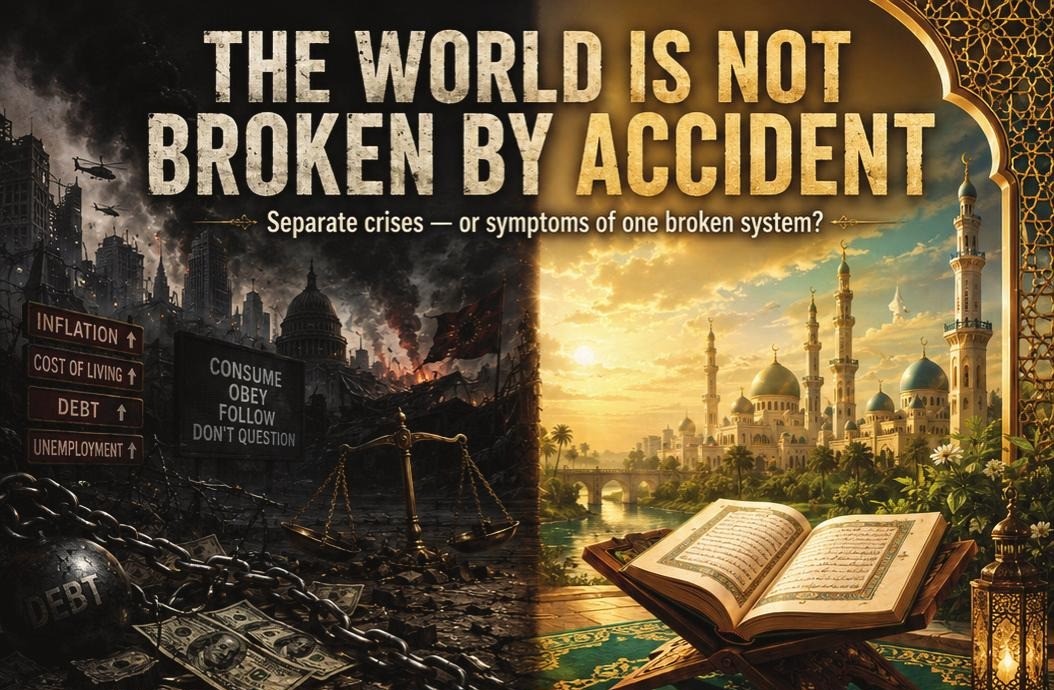
Is voting in the secular system truly a rewardable act? Is it a fard (obligation)? Is it an amanah (trust) about which we will be questioned on the Day of Judgement? These claims have been made with growing urgency to mobilize Muslims into the electoral process, with the promise that participation will change the system or elect America first politicians or help the Muslim cause. Such claims deserve to be examined on their merits and measured against the hukm shar’i (Islamic ruling) and the example of the Prophet (ﷺ).
Voting Is Not an Obligation
Even within the secular democratic system, voting is not an obligation. Under the U.S. Constitution, electoral participation is a right that each citizen may choose to exercise or not. For some Ulema to now declare voting a fard or an amanah, implying that abstaining is punishable by Allah (ﷻ), goes further than even the Constitution itself. The dala’il (evidences) offered to support this classification do not withstand scrutiny.
Electing a candidate is not merely about representation; it is about legislation. In a secular democracy, sovereignty belongs to human beings and is exercised through legislation, where laws are made, amended, or repealed by majority opinion. Islam asserts unequivocally that sovereignty and legislation belong to Allah (ﷻ) alone. Voting to elect a human being to legislate on one’s behalf therefore contradicts the right of Allah (ﷻ), who says:
Legislation belongs to none but Allah. [TMQ Yusuf: 40]
Electing a lawmaker is not a question of legitimate scholarly difference (Ikhtilaf). It is decisively prohibited, because Allah (ﷻ) is the Lawmaker. It is not open to ijtihad, so it does not fall within scholarly opinion. Asking whether it is permitted is like asking a scholar whether alcohol is haram.
The System Changes You, Not the Reverse
The promise of changing the system from within has never been fulfilled. Political participation in the secular democratic system molds the participant to fit its values and agenda. There is no single Muslim politician in the West that has remained true to the Deen or has had a net positive impact for the Muslims. The Qur’anic contrast between Qaroon and Musa (عليه السلام) is instructive. Qaroon worked within Pharaoh’s system, presented himself as a man of influence, a supposed man of the people and ended up as its chief enabler, supporting the system and sharing Pharaoh’s fate. Whereas Musa (علیه السلام) grew up within Pharaoh’s palaces but worked outside the system and secured the liberation of his people.
The “Lesser of Two Evils” Is a Downward Spiral
The principle of choosing the lesser of two evils has been repeatedly misused to legitimize haram actions where a clear halal path exists. It is a downward spiral to more evil. In practice, the supposed benefit has often proven more harmful to the Ummah.
The pattern is familiar. Obama, the “lesser evil” to Bush, expanded many of the policies he was elected to end and increased the bombing of several Muslim countries. Biden, the “lesser evil” to Trump, presided over unconditional support for the genocide in Gaza. And the campaign to “punish” Biden by electing a self-described anti-war Trump has been followed by continued support of the Zionist and increased military strikes across Muslim countries. This record should, by now, dismantle the lesser-of-two-evils argument.
The Myth of Representation
Representation in appearance is not representation in substance. Muslim officeholders have participated in Kufr rituals and have been prominent promoters of LGBTQ advocacy. Identity alone does not secure our interests. When their record is questioned, their supporters often deflect criticism by insisting that they do not take their religion or morals from Muslim politicians and activists, or they excuse those politicians’ actions by saying that politics is dirty.
Separating morality from politics is the very definition of secularism. These figures are not promoted as ordinary politicians; their entire public identity rests on being Muslim. Masajid and Muslim organizations promote them as “our representatives,” and they are presented to our children as role models. We cannot elevate these figures at every level and then instruct people not to take their morals from them. Doing so teaches secularism and liberalism by example.
Candidates, Muslim or otherwise, who advocate for or align with fahisha (immorality) should not be given a platform within our community to promote their views. The community has a duty to protect itself from that influence. Those who granted these platforms and promoted these figures must take responsibility for their actions.
Allah (ﷻ) says:
Cooperate with one another in goodness and righteousness, and do not cooperate in sin and transgression. And be mindful of Allah. Surely Allah is severe in punishment. [TMQ Al-Ma’idah: 2]
A Sincere Message to the Ulema and The Path Forward
Some Ulema advocate working with non-Islamic governments (Western or in the Muslim world), as a means of protecting the rights and interests of the Muslims, however, this is clearly not the Sunnah of the Prophet (ﷺ). If political expediency and maslaha (benefit) were the yardstick by which we measure our actions, the Prophet (ﷺ) surely would have ceded his call in Makkah when the Sahabah (رضي الله عنهم) faced severe torture.
While Bilal (رضي الله عنه) was burned between the desert sand and crushing stones, the Prophet (ﷺ) refused to compromise or appease the Quraishi elite. While Sumayyah (رضي اللہ عنھا) was tortured and pierced by a spear, the Prophet (ﷺ) refused to cave in to the demands of the Quraish. While Ammar bin Yassir (رضي الله عنه) was drowned and tortured, the Prophet (ﷺ) refused to halt his Dawah to the disbelieving Quraish. While the Quraish boycotted the Muslims, Banu Hashim and Banu Muttalib, while the Sahabah (رضي الله عنهم) were forced to eat grass, bark and leather and while babies screams of hunger could be heard resonating through the valley, the Prophet (ﷺ) refused to take positions in Dar al-Nadwa (Quraishi government).
If political expediency and maslaha (benefit) were from the Sunnah of the Prophet (ﷺ), he (ﷺ) surely would have advised the Quraish, worked with them, joined their councils, attended their meetings and legitimized their way of life. Instead, he (ﷺ) told the Sahabah (رضي الله عنهم) to remain patient in the face of adversity and to remember their reward with Allah (ﷻ). In turn, the Sahabah (رضي الله عنهم) were courageous, emboldened and reaffirmed in their Iman and resolve.
He (ﷺ) built the Sahabah (رضي الله عنهم) with adherence to Islam, called out the ills of society, showed the fallacy of their way of life and their gods, laid bare open the corruption of their leaders and most importantly offered an alternative way of life with a socio-economic-ruling system built on the Laws of Allah (ﷻ).
Rejecting electoral politics does not mean doing nothing. There are permitted avenues that are far more effective, and that safeguard our Deen while making the Ummah firmer in its adherence to the Shari'ah. In line with the example of prophetic politics our priorities should be to:
1. Protect the minds of our youth from secularization and kufr.
2. Articulate the fallacies of today’s false gods: democracy, capitalism and secularism.
3. Expose the oppression of the American empire and the West.
4. Present Islam’s alternatives: its aqeedah, its social system, its economic system and its ruling system.
5. Speak out against Western oppression of Muslims and become a voice for the voiceless.
6. Stand in solidarity with the oppressed at home, on our own platform, without being co-opted by liberal or conservative agendas.
7. Call for the alternative way of life in the Muslim world, the Caliphate (Khilafah) on the method of prophethood, as the only means for the complete practical application of Islam.
These are the principled positions the Prophet (ﷺ) set for us and it is the only example that the “inheritors of the Prophets,” the noble Ulema and the people should follow.
Hence, taking legislative or advisory positions within Western governments who are at war with Islam or cozying up with tyrant rulers in the Muslim world for some perceived maslaha (benefit) is betraying the amanah (entrusted responsibility) of this Ummah. Such, actions by the Ulema gives legitimacy to the crimes of these governments who have oppressed and persecuted the Ummah. These are not the actions of “inheritors of the Prophets.”
Regardless of which administration is in power (Bush, Obama, Biden, Trump), the American government has waged a war on the Muslims and Islam, sought to secularize the Muslims, disconnect us from the Ummah at large and transform Islam into a docile, secular “American Islam.” The American government has spent millions of dollars and employed token Muslim figures to further its agenda. The Ulema can neither be naive to this fact or worse be part of this agenda.
Hizb ut-Tahrir America
16 Jumada Al-Awwal, 1448
October 27, 2026