For the slave of debt, the chains are difficult to see. They are not forged from iron and they make no sound. Yet they bind lives, shape choices, and consume years of labor all the same. The modern chain has no metal.
Every day, billions of people go to sleep carrying debt. While they are asleep, student loan debt continues accumulating interest, mortgages continue generating payments, and credit card balances continue growing. By the time they wake up and begin another day of work, they are often deeper in debt than they were the day before.
For many people, debt begins before adulthood even starts. They borrow for education through student loans. They finance vehicles to get to work. They take out mortgages to purchase homes. They rely on credit cards to cover expenses. Medical debt follows illness. Entrepreneurs take business loans to pursue opportunities. Governments borrow to fund spending. Entire nations operate under mountains of debt that future generations will be expected to repay.
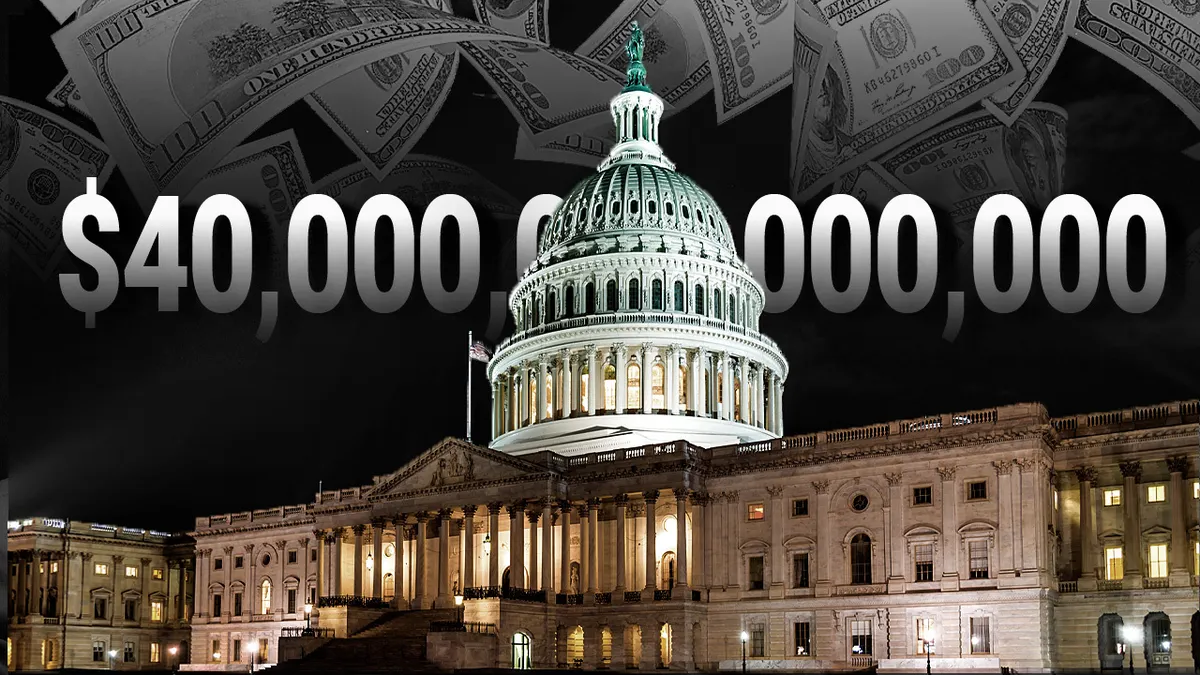
This is not a marginal phenomenon. More than 43 million Americans carry student loan debt. Mortgage debt in the United States exceeds $13 trillion. Auto loan debt exceeds $1.6 trillion. Credit card debt exceeds $1.3 trillion. Total household debt now reaches $18 trillion. At the global level, total public and private debt has surpassed $360 trillion, more than three times global GDP. Behind every statistic is a human being whose future labor has already been pledged to someone else.
A person burdened by debt becomes dependent upon maintaining income at all costs. Missing payments can mean losing a home, transportation, financial standing, or access to future credit. As obligations increase, freedom decreases. Careers are often chosen for security rather than purpose. Risks become difficult to take. Speaking against corruption becomes costly when one's livelihood depends upon abiding by the current status quo.
Consumer culture reinforces this dependency. Credit cards, personal loans, vehicle financing, and "buy now, pay later" schemes create the appearance of prosperity while expanding long-term obligations. People are encouraged to consume today and repay tomorrow, often with interest attached.
At the center of this system lies riba. Riba allows money to generate more money without productive effort, shared risk, or real economic activity. The lender receives a guaranteed return while the borrower bears the burden. Wealth accumulates through ownership of credit, while labor and risk are transferred to those who need financing.
The destructive nature of riba is not merely that debt exists, but that debt continually grows. A family may purchase a home through a conventional mortgage yet ultimately repay hundreds of thousands more in interest over the life of the loan. Similar dynamics apply to student loans, business financing, and credit card balances. Years of labor are transferred not toward building wealth but toward servicing financial claims.
For example, a family may purchase a $400,000 home through a conventional thirty-year mortgage, yet depending on interest rates, they may ultimately repay more than $960,000 before owning the home outright. Nearly another entire house is paid for, yet no additional house was received. Allah declares:
﴾وَأَحَلَّ اللَّهُ الْبَيْعَ وَحَرَّمَ الرِّبَا﴿ البقرة ٢٧٥
"Allah has permitted trade and forbidden riba." [TMQ Al-Baqarah: 275]
The enslavement created through riba extends far beyond individuals. At every level of society, future labor and future resources are pledged in exchange for present money. Governments around the world increasingly rely upon borrowing to finance their operations. As debt accumulates, policy decisions become influenced not only by the needs of citizens but also by the expectations of creditors, lenders, investors, and financial institutions. Global public debt now exceeds $100 trillion, while many developed nations spend hundreds of billions of dollars annually just on interest payments alone.
Countries facing financial crises frequently turn to organizations such as the International Monetary Fund (IMF) for assistance. For example, in 2024 Jordan entered a four-year IMF program worth approximately $1.3 billion, followed by additional financing facilities. These arrangements came alongside fiscal targets, economic reforms, and policy commitments negotiated as part of the financing process. Whether such conditions are beneficial or harmful is not the central issue. The deeper issue is dependency. A nation dependent upon external financing cannot exercise the same degree of independence as a nation that finances itself. Debt becomes leverage; leverage becomes influence; influence becomes power.
This reveals a deeper ideological problem. Islam approaches wealth from an entirely different foundation. The capitalist worldview treats money itself as a commodity that can be rented and multiplied through interest. Islam views wealth as something that should be generated through trade, entrepreneurship, production, agriculture, services, and labor. Profit is permissible when accompanied by risk, effort, and value creation not through guaranteed claims upon another person's hardship.
Allah says:
﴾يَا أَيُّهَا الَّذِينَ آمَنُوا لَا تَأْكُلُوا أَمْوَالَكُم بَيْنَكُم بِالْبَاطِلِ إِلَّا أَن تَكُونَ تِجَارَةً عَن تَرَاضٍ مِّنكُمْ﴿ النساء ٢٩
"O you who believe, do not consume one another's wealth unjustly, but only through trade conducted by mutual consent." [TMQ An-Nisa': 29]
For this reason, Islam promotes partnership-based finance rather than interest-based lending. Models such as Musharakah and Mudarabah link returns to real economic activity and shared risk. Both parties participate in success and bear responsibility in loss. Wealth is connected to production rather than extraction.
Islam also addresses indebtedness at its root by recognizing that access to life's necessities should not depend entirely upon an individual's ability to compete in the marketplace. The Islamic state bears responsibility for ensuring that the basic needs of every citizen are met, including food, clothing, shelter, healthcare, and security.
In addition to zakat, Islam recognizes certain resources as belonging collectively to the Ummah. The Prophet ﷺ said:
Islam commands that essential public resources cannot be monopolized by private interests at the expense of society. Revenue generated from public wealth and state-owned assets is managed for the benefit of the people. Rather than forcing individuals to borrow in order to secure housing, healthcare, education, or basic subsistence, the Islamic economic order seeks to guarantee these necessities through a combination of public revenues, zakat, family responsibility, and state obligation.
Islam focuses human life around purpose rather than perpetual financial obligation. The capitalist worldview reduces man to a producer, consumer, borrower, and debtor. Islam reminds man that he was created to worship Allah.
﴾وَمَا خَلَقْتُ الْجِنَّ وَالْإِنسَ إِلَّا لِيَعْبُدُونِ﴿ الذاريات ٥٦
"And I did not create jinn and mankind except that they worship Me." [TMQ Adh-Dhariyat: 56]
His purpose is not merely to work, borrow, spend, and repay. His purpose is to worship his Creator, establish justice, strengthen his family, contribute to society, and carry values greater than material gain.
Today, people are told that debt is opportunity. However, the reality is that it is just a trap. Student loans, credit cards, mortgages, car payments are all means to chain people into years of work, silence, and enslavement before ever really owning anything.
Muslims urgently need to stop treating riba as merely a private sin and begin recognizing it as a civilizational issue. Riba is not simply an individual financial mistake. It is a system that affects institutions, governments, global finance, and the distribution of power throughout society.
The Islamic alternative is not a utopian fantasy. It is a comprehensive economic vision built upon justice, accountability, and real economic activity. Rather than interest-bearing debt, Islam encourages partnership models such as Musharakah and Mudarabah, where profit and risk are shared between parties. It promotes trade rather than financial extraction. It encourages investment tied to productive activity rather than endless debt creation.
The responsibility of Muslims is not merely to survive within unjust systems but to confidently present and work toward a superior alternative rooted in revelation, justice, and human dignity.
The oceans of debt surrounding humanity today were not created by accident. They are the natural outcome of a system that normalizes borrowing, glorifies dependence, and treats riba as necessary for economic progress.
The solution is not simply to manage debt more efficiently. The solution is to challenge the ideas that created it. Only a system rooted in justice, accountability before Allah, real economic activity, and the prohibition of riba can truly liberate humanity from this invisible bondage. Remember, Islam recognizes debt but condemns riba (usury) and unjust exploitation.
For the slave of debt, the chains are difficult to see. They are not forged from iron and they make no sound. Yet they bind lives, shape choices, and consume years of labor all the same. The modern chain has no metal.