I. Introduction: The 1492 Hinge and the 1,300-Year Context
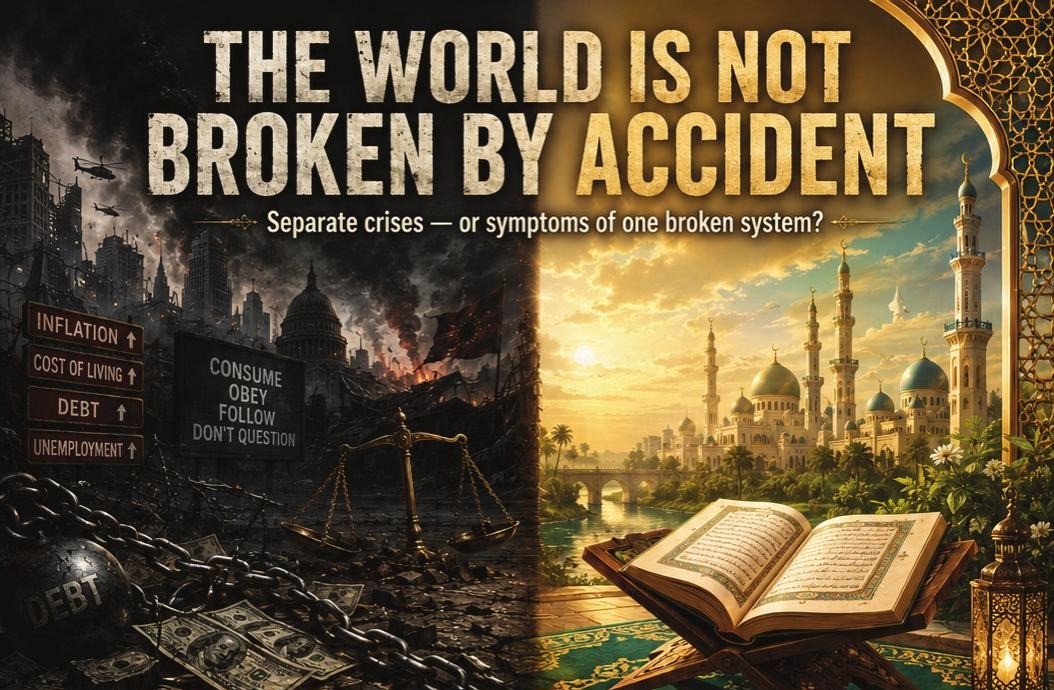
The history of the United States is conventionally narrated as a story of liberation - a rebellion against monarchy, a beacon of liberty, an “exceptional” experiment in human self-governance. But from the vantage point of Islamic civilization, which stretched from the shores of the Atlantic to the steppes of Central Asia for over a millennium, this narrative is incomplete. The 250-year trajectory of the United States appears not as humanity's ascent toward liberty, but as a fleeting, materialistic interlude - a “tempest in a teacup of history” - that rose precisely as the Islamic Ummah fragmented and fell.
A Muslim's reading of American history does not begin in 1607 or 1776. It begins in 1492, and it begins with a coincidence so stark it functions as a thesis statement: the same year the Catholic monarchs Ferdinand and Isabella completed the Reconquista by conquering Granada - the last seat of Islamic governance in al-Andalus - they commissioned Columbus to sail west. The fall of Muslim Spain and the “discovery” of the Americas are not two events. They are one event: the redirection of European Christendom's civilizational energy from a war against Islam toward a project of global extraction that would ultimately produce the entity called the United States.
For nearly eight centuries, al-Andalus had demonstrated that Islamic governance could produce a civilization of extraordinary intellectual, scientific, and cultural achievement on European soil - a society where Muslims, Christians, and Jews operated under a governing framework derived from revelation rather than ethnic tribalism or feudal tyranny. The Reconquista didn't merely expel Muslims from Iberia. It closed the door on that proof of concept. And what replaced it - the colonial extractive model, the Atlantic slave trade, the genocide of Indigenous peoples - was, in this reading, what happens when a civilization organized around the rejection of divine sovereignty is unleashed without constraint.
The further irony: the European maritime expansion that produced the Americas was itself driven by the need to circumvent Muslim control of overland trade routes. Columbus sailed west because Muslims controlled the East. America exists, in a literal geographic and economic sense, because Europeans needed to get around the Islamic world.
The Measuring Stick: Before examining the American experiment, we must establish the criteria by which any civilization should be judged from an Islamic perspective:
1. Tawhid - does the civilization acknowledge a moral authority above rulers, markets, race, and national interest?
2. Adl - does it establish justice even for enemies and minorities?
3. Amanah - does it treat power, wealth, land, and knowledge as trusts?
4. Shura and accountability - can rulers be restrained and corrected?
5. Protection of human dignity - how does it treat the poor, conquered, enslaved, Indigenous, foreign, and politically weak?
II. Era 1: The Reconquista Unleashed - The Seed of Genocide and Greed (Pre-1492 - 1776)
“The Bloody Foundation: Christian Colonialism Meets Indigenous Fitrah”
The colonial era, from roughly 1607 to 1776, is read by this framework as the construction of a society built on three pillars that Islamic political thought identifies as the defining characteristics of Jahiliyyah - the pre-Islamic condition of civilizational ignorance.
First, the displacement of divine sovereignty with human sovereignty. The colonial charters and eventually the constitutional framework that emerged from them located authority in human institutions - the Crown, the colonial assembly, eventually “We the People.” From the perspective of an intellectual tradition rooted in hakimiyyah - the principle that legislative sovereignty belongs to Allah alone - this is not a political choice among options. It is the foundational error from which all subsequent American pathologies flow.
Second, an economic order built on riba and dispossession. The colonial economy was, from its inception, a usurious extractive apparatus. The joint-stock companies that funded colonization (the Virginia Company, the Massachusetts Bay Company) were capital ventures designed to generate returns for investors - the riba-based financing model extended to civilizational scale. The land itself was acquired through a theology of dispossession - the Doctrine of Discovery, rooted in papal bulls from the 1450s, again the post-Reconquista era - that declared non-Christian lands available for seizure. Indigenous peoples who had inhabited the continent for millennia were defined out of human consideration by a legal and theological framework that a Muslim would identify as the natural product of a civilization unmoored from revelation.
Third, the enslavement of African peoples, including Muslims. This is where a Muslim's reading becomes particularly sharp. Historians estimate that between 15 and 30 percent of enslaved Africans brought to the Americas were Muslim. They came from Senegambia, the Fula territories, the Mandinka heartland, and the Hausa states - regions with centuries of Islamic scholarship, governance, and civilizational infrastructure.
The names matter. Omar ibn Said was a Muslim scholar from West Africa who spent more than fifty years enslaved in North Carolina. In 1831, he composed a brief autobiography in Arabic - the only known narrative written in Arabic by an enslaved person in North America. Born to a wealthy family around 1770, he was abducted and sold into slavery, filling the walls of his prison cell with petitions for release written in Arabic using embers from the fireplace. Ayuba Suleiman Diallo was a scholar who could write the entire Quran from memory and who eventually secured his freedom partly through the fascination his literacy provoked in his captors. Bilali Muhammad on Sapelo Island, Georgia, wrote a manuscript of Islamic jurisprudence from memory in Arabic while enslaved. Abdul Rahman ibn Ibrahim Sori was a military commander and son of the ruler of Futa Jallon who spent forty years in slavery in Mississippi before his identity was discovered.
These men were not “primitive” people rescued by Western civilization. They were products of a civilizational tradition that had been producing literate, governed, commercially sophisticated societies while Europe was still in its feudal period. The slave system didn't merely exploit labor. It erased Islamic identity. It stripped Muslims of their names, their language, their salah, their communal structures and replaced them with a Christianity that sanctified their bondage. The very fact that this history has to be excavated and argued for, rather than standing as common knowledge, is itself evidence of the erasure's thoroughness.
Theological Contrast: European colonialism was Isti'mar (exploitative extraction), while Islamic Futuhat (openings) established protected status (Dhimma) for non-Muslims. Where Islamic conquests brought law, protected churches and synagogues, and allowed people to keep their land, the American project removed the people from the land. Adl vs. Zulm - justice vs. oppression.
III. Era 2: The Taghut of Philadelphia - The False Covenant of the Enlightenment (1776 - 1865)
“Ink, Iron, and Hypocrisy: The Secular Republic”
The American Revolution and the constitutional period (1776 - 1800) are typically narrated as humanity's great leap toward liberty. A Muslim reads them differently.
The Sovereignty Error: The Declaration of Independence asserts that governments derive “their just powers from the consent of the governed.” The Constitution opens with “We the People.” These are not, in this reading, neutral procedural statements. They are theological claims about where sovereignty resides, and they are wrong. Not impractical, not premature, but wrong in the way that shirk is wrong: they assign to human beings an authority that belongs to Allah alone. The entire American political experiment, however sophisticated its mechanics, is built on this foundational category error.
The activist's reading also punctures the mythology of the Founders as moral visionaries. The Constitution that enshrined “liberty” simultaneously counted enslaved human beings as three-fifths of a person for purposes of political apportionment - not because the slaveholders considered them three-fifths human, but because it maximized slaveholding states' congressional power. The Bill of Rights that guaranteed freedom of religion, speech, and assembly coexisted with a legal framework that permitted the buying and selling of human beings and the annihilation of Indigenous nations. This is not a minor inconsistency. From the Islamic civilizational perspective, it is exactly what you would expect from a system that derives its moral authority from human consensus rather than divine legislation: the strong define “rights” in terms that protect the strong.
The Treaty of Tripoli (1797): Article 11 of this treaty explicitly states that, “the Government of the United States of America is not in any sense founded on the Christian Religion.” This was diplomatic language meant to assure Muslim leaders that the conflict was not like past conflicts with Christian nations, such as the Crusades. For the Muslim, however, it serves as critical proof that from its very inception, the American state operated as a purely secular, transactional machine untethered from divine moral codes, engaging the Muslim world purely for tactical self-interest.
The Madinah Contrast: Compare this to the Constitution of Madinah - the Sahifah - which the Prophet (saw) established upon the Hijrah in 622 CE. That document created a multi-confessional political community with defined rights and obligations for Muslims, Jews, and polytheists alike, under a framework of governance derived from revelation. It didn't promise universal equality and then excluded the majority of its population. It defined obligations and protections specifically, and it rooted its authority not in the consent of the governed but in the sovereignty of the Legislator. The Madinah model preceded the American one by over a millennium, and it did not require chattel slavery to function.
The Civil War as False Redemption: Lincoln's Civil War was not about moral emancipation. It was a brutal industrial war to preserve the economic union. Islam abolished slavery through gradual, spiritually grounded manumission. America ended it through a bloodbath costing 600,000 lives and still birthed Jim Crow. The Emancipation Proclamation freed enslaved people in Confederate territory - where Lincoln had no enforcement power- and exempted border states where he did. Reconstruction's brief promise was crushed within a decade by the reassertion of white supremacist governance through terrorism, disenfranchisement, and convict leasing - a system that effectively re-enslaved Black men through the criminal legal system.
IV. Era 3: Empire, Tyranny, and the Wounding of the Qibla (1865 - 1948)
“From the Pacific to Palestine: The Empire of Theft and the Zionist Betrayal”
The 1800s in America was the century of Manifest Destiny, and the Muslim reads this doctrine as secular capitalism's version of a civilizational mission - stripped of any genuine transcendent referent but retaining all the violence of one. The westward expansion was genocide operationalized as policy: the Indian Removal Act, the Trail of Tears, the systematic destruction of the Plains nations, the boarding school system designed to “kill the Indian, save the man.” An estimated 5 to 15 million Indigenous people were reduced to fewer than 250,000 by the close of the century.
The Moro Betrayal - America's First Muslim Massacre: The Spanish-American War of 1898 marked America's transition from a continental power to an overseas empire. The United States acquired the Philippines, and with it, a Muslim population - the Moro people of the Sulu Archipelago - who had been governed under Islamic law for centuries.
In 1899, the U.S. entered into the Kiram-Bates Treaty with the Sultanate of Sulu. The treaty functioned to prevent the entry of the Sulu Sultanate into the Philippine-American War while the United States concentrated its forces in northern Luzon. The agreement promised that the United States would not interfere with Moro religion or governance. Crucially, the U.S. had earlier exploited the spiritual authority of Ottoman Caliph Abdulhamid II, asking the Caliph to send a telegram to the Moro Muslims urging them not to fight the Americans. Once the U.S. secured its footing, it unilaterally abrogated the Kiram-Bates Treaty. U.S. colonial administrators aggressively dismantled the indigenous Islamic legal frameworks of the Moro people, replacing them with secular American jurisprudence and burning sacred historical manuscripts to sever Muslims from their history.
The culmination came in March 1906 at Bud Dajo - a volcanic crater on the island of Jolo. U.S. Army and Marine Corps forces surrounded and attacked approximately 800 to 1,000 Tausug villagers - men, women, and children - who had taken refuge on the mountain. When the attack ended, only six of the hundreds of Moro survived. American casualties: 21 killed and 75 wounded. The Moro Crater Massacre was the bloodiest engagement of the Moro Rebellion - a forgotten atrocity captured on camera but erased from American historical memory. This was the U.S.'s first major massacre of a Muslim population - a precursor to Fallujah, Abu Ghraib, and Gaza.
The Catastrophe of 1924: The abolition of the Ottoman Caliphate on March 3, 1924 is, from the Muslim's perspective, the single most consequential political event of the twentieth century. The sequence that led to the abolition was driven by European and increasingly American geopolitical engineering: the dismemberment of Ottoman territories through Sykes-Picot (1916), the Balfour Declaration's promise of Palestine to the Zionist movement (1917), the imposition of the mandate system, and the installation of client rulers across the Muslim world.
The King-Crane Commission of 1919 - sent by President Woodrow Wilson to ascertain the viability of self-determination in the disintegrating Ottoman Empire - collected over 1,800 petitions from local inhabitants. The commission documented that Arabs overwhelmingly favored an independent Syria and rejected Western mandates. Yet the U.S. and Europe completely ignored these findings to protect imperial and resource interests. The principle was clear: self-determination is for Europeans; managed subjugation is for Muslims.
The United States did not draw the Sykes-Picot lines, but it inherited, endorsed, and ultimately enforced the post-Ottoman order. The American-led international system since 1945 has functioned as a mechanism to prevent the reconstitution of unified Islamic governance in any form.
V. Era 4: The Guardian of Jahiliyyah - Neocolonial Istidraj (1948 - 2001)
“The Rope Lengthens: Oil, Riba, and the Cultural Invasion of the Ummah”
Istidraj is when Allah gives a nation everything its desires - wealth, technology, and global dominion - while slowly stripping it of Haya (modesty) and Rahma (mercy). This was America's golden age of deception.
The Architecture of Control: The Bretton Woods system (1944), the IMF, the World Bank, the dollar as global reserve currency, and the petrodollar arrangement with Saudi Arabia (1974) each constitute a mechanism of riba extended to global scale. The world's largest Muslim oil exporter prices the world's most important commodity in the currency of the world's most powerful non-Muslim state, and recycles its surpluses into American Treasury securities. The Ummah's wealth finances its own subordination. This is not conspiracy theory. It is documented monetary policy.
The Coups and the Interventions: The pattern is not accidental. It is a policy. And the policy is this: Muslim-majority nations are permitted to have governments of any kind - monarchies, dictatorships, military juntas, secular republics - except governments that derive their legitimacy from Islam and seek to implement Islamic governance, or even those that show any semblance of political independence from American hegemony. When that happens, the United States intervenes directly or indirectly.
- Iran 1953: The CIA-orchestrated coup overthrew Mohammad Mosaddegh - a democratically elected leader- and installed the Shah, because Mosaddegh had nationalized Iranian oil.
- Indonesia 1965: U.S. support for Suharto's massacre of hundreds of thousands.
- Afghanistan: The CIA armed, trained, and funded the mujahideen through Operation Cyclone to fight the Soviets, then abandoned and eventually targeted those same fighters as terrorists.
- Iraq: The U.S. backed Saddam Hussein against Iran, then destroyed Iraq twice.
- Egypt 2013: The overthrow of Mohammed Morsi - the first democratically elected president in Egyptian history, representing the first Islamically oriented party to win a free election in the Arab world - was toppled with American acquiescence.
The Creation and Sustenance of the Zionist Entity (1948 - present): The creation of the Zionist entity, the displacement of 750,000 Palestinians in the Nakba, the occupation of the West Bank and Gaza since 1967, the annual American military aid exceeding $3 billion, the diplomatic shielding at the United Nations - all of this constitutes the insertion of a permanent Western military-political outpost in the heart of the Muslim world, functioning as a mechanism of regional fragmentation and a guarantee that no unified Islamic political project can emerge in the Levant.
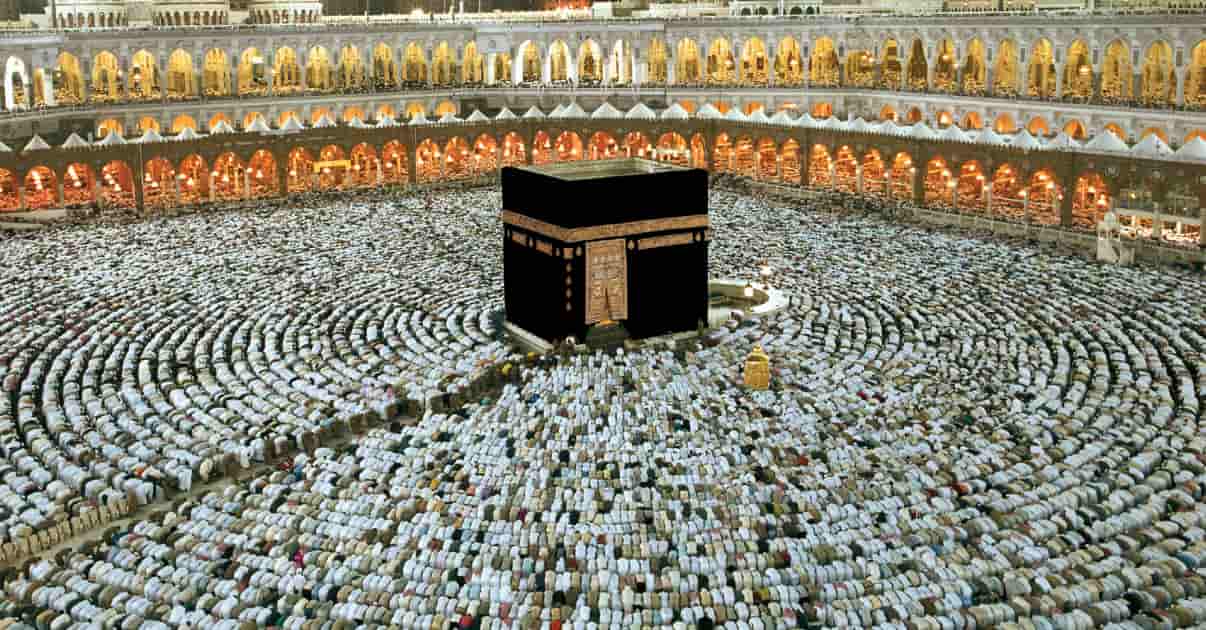
Domestic Muslim Growth: Simultaneously, post-1965 immigration reforms and the African American Islamic revival (Malcolm X's pilgrimage to Makkah, Warith Deen Mohammed's movement toward Sunni Islam) created a growing, sophisticated Muslim presence inside the empire. This is a profound irony: America became simultaneously the power most implicated in the subordination of Muslim lands and one of the most important settings for the reconstitution of Muslim intellectual and communal life in the West.
VI. Era 5: The Terminal Phase - Overreach and the Prophetic Promise (2001 - 2026)
“The Pharaoh Drowns: Observing the Sunnah of Allah in Real Time”
The War on Terror as Civilizational War: September 11, 2001 and its aftermath are read as the moment the United States dropped the pretense and declared open civilizational war against Islam - not against “terrorism,” not against “extremism,” but against any expression of Islamic political identity that challenges the American-led order.
The combined cost of post-9/11 military operations exceeds $8 trillion. The death toll across Iraq, Afghanistan, Pakistan, Syria, Yemen, and Somalia reaches into the hundreds of thousands of civilians. Twenty years of occupation in Afghanistan ended with the Taliban returning to power. Iraq remains fractured. Libya is a failed state. Syria was devastated. Yemen faces one of the worst humanitarian crises in modern history.
The invasions of Afghanistan and Iraq were launched on fabricated evidence (WMDs). Abu Ghraib, Guantánamo, and drone warfare normalized the extrajudicial assassination of Muslims - including American citizens - by presidential decree. The domestic surveillance apparatus under the PATRIOT Act subjected American Muslim communities to infiltration, entrapment, and monitoring on a scale unthinkable for any other religious community.
The Muslim asks: what civilization spends $8 trillion to destroy and then fails to build? The answer, in this framework, is a civilization that was never built - that was always, from 1492 forward, in the business of extraction, destruction, and subordination.
The Internal Collapse: Epidemic rates of depression, anxiety, suicide, opioid addiction killing tens of thousands annually, family disintegration - approximately 40–50% of American marriages end in divorce. Mass incarceration at rates exceeding those of every other nation on earth. Mass shootings so routine they no longer sustain a news cycle for more than 48 hours. Political polarization so profound that the basic legitimacy of elections is contested. Declining life expectancy - a phenomenon essentially unique among developed nations.
The Muslim's argument is that none of this is anomalous. All of it is predicted - not by progressive social science, but by the Quran itself:
وَمَنْ أَعْرَضَ عَن ذِكْرِى فَإِنَّ لَهُۥ مَعِيشَةً ضَنكًا وَنَحْشُرُهُۥ يَوْمَ ٱلْقِيَـٰمَةِ أَعْمَىٰ
And whoever turns away from My remembrance - indeed, he will have a depressed (miserable) life [TMQ Surah Taha:124]
A civilization that severs itself from divine guidance does not simply make political errors. It produces human beings who are incapable of flourishing, because the human being (al-insan) was designed to function within a framework of submission to the Creator, and outside that framework, the machinery breaks down.
The Resistance and Resilience: Contrary to the narrative of collapse, Muslim Americans are thriving institutionally. Studies show Muslim Americans give approximately $3,200+ annually to charity versus $1,905 for the general population, and volunteer significantly more hours. Approximately 10% of U.S. physicians are Muslim. Fazlur Rahman Khan, the “father of tubular skyscraper design,” engineered the Willis Tower and John Hancock Center - structural systems still used in skyscrapers worldwide. Muslims are not merely victims; they are co-owners of this space, building infrastructure for the future Ummah.
The Promise: The Prophet (saw) prophesied that the Caliphate will return upon the methodology of prophethood. American hegemony is the final, desperate gasp of Jahiliyyah. The Ottomans were dismantled in 1924, but just as the Umayyads and Abbasids rose from the chaos, the coming global superpower - Islam - is already in labor. The 2021 Kabul retreat was not a withdrawal; it was a rout - a modern-day defeat reminiscent of the Crusader fall of Acre. The 250-year American dream is turning into a nightmare for America, but for Muslims, it is the Fajr (dawn) before the Caliphate's return.
VII. The Civilizational Balance Sheet and the Obligation of Renewal
Stepping back from the chronological narrative, the Muslim's summary judgment on 250 years of the American experiment goes something like this:
What America Accomplished (Institutionally): The United States mastered several elements of civilizational power more effectively than most modern Muslim societies: (1) durable institutions that survived presidents, wars, scandals, and economic crises; (2) massive knowledge production connecting universities, government, corporations, laboratories, philanthropy, and military research; (3) talent absorption - attracting scientists, physicians, scholars, entrepreneurs, dissidents, and workers from across the world; (4) economic organization transforming land, labor, capital, technology, and consumer demand into unparalleled productive capacity; (5) strategic patience building naval, commercial, financial, diplomatic, and intelligence capabilities over generations; (6) narrative power convincing much of the world that American interests represented freedom, modernization, and universal progress; (7) corrective mechanisms - constitutional litigation, elections, journalism, social movements - that enabled oppressed groups to obtain meaningful reforms.
Muslims who dismiss all of this as mere kufr or conspiracy will learn nothing and remain weak.
Where America Violated Divine Standards: Measured against Qur’anic principles, American history contains grave and recurring injustices: Indigenous dispossession and genocide; racial slavery, segregation, and racial terror; territorial conquest; capitalist exploitation; foreign coups; support for dictatorships; colonial rule in the Philippines and elsewhere; warfare causing extensive civilian suffering; torture and indefinite detention; materialism and commodification; and selective application of human rights.
Its deepest spiritual problem is not technological power but the absence of a transcendent and binding moral authority above human desire, markets, national interest, and state power. Rights are treated as self-evident, but their source and limits remain contested. Freedom can therefore become freedom for corporations to manipulate desire, for individuals to destroy themselves through appetite, or for powerful states to define their own actions as necessary exceptions.
The Civilizational Balance Sheet: Place the first 250 years of Islamic civilization next to the first 250 years of the American republic and compare them across the metrics that secular modernity itself claims to value: scientific advancement, cultural production, management of diversity, economic distribution, institutional durability, and the sheer body count.
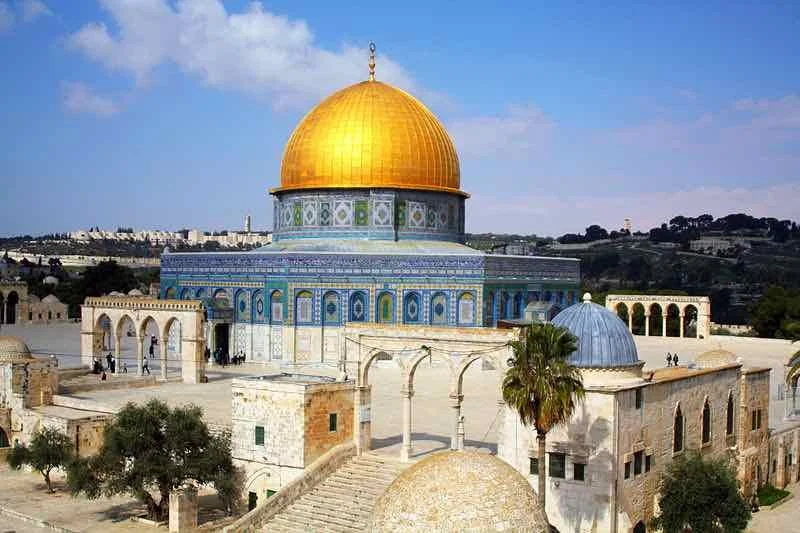
Islam's first 250 years (622 - 872 CE): the establishment of the Madinah polity; the Rashidun Caliphate's governance across Arabia, Persia, Egypt, and North Africa; the Umayyad expansion to the Iberian Peninsula and the borders of China; the founding of Baghdad as the world's greatest center of learning; the translation movement that preserved and advanced Greek, Persian, and Indian science and philosophy; the development of Islamic jurisprudence across multiple legal schools; architectural achievements from the Dome of the Rock to the Great Mosque of Córdoba; a commercial civilization that integrated the Mediterranean, the Indian Ocean, and the Silk Road; and a multi-ethnic, multilingual political order that governed diverse populations through a framework derived from revelation.
America's first 250 years (1776–2026): the genocide of Indigenous peoples; the largest chattel slavery system in modern history; a civil war over whether human beings could be owned; a century of legal racial apartheid; two world wars; the only use of nuclear weapons against civilian populations; the destabilization of dozens of sovereign nations; the construction of a global military empire with bases in over 80 countries; an economic order that has produced the most extreme wealth inequality in human history; and a domestic culture of addiction, depression, family disintegration, and mass violence.
The comparison is not polemical. It is empirical. And the conclusion it supports is not that America is uniquely evil but that the American experiment is the predictable product of a civilization that rejected the source of legitimate governance. Every pathology follows from the foundational decision. Every apparent reform reconfigures the error rather than correcting it.
VIII. Conclusion: A Blip Before the Dawn
وَعَدَ ٱللَّهُ ٱلَّذِينَ ءَامَنُوا۟ مِنكُمْ وَعَمِلُوا۟ ٱلصَّـٰلِحَـٰتِ لَيَسْتَخْلِفَنَّهُمْ فِى ٱلْأَرْضِ كَمَا ٱسْتَخْلَفَ ٱلَّذِينَ مِن قَبْلِهِمْ…
Allah has promised those who believe and do righteous deeds that He will surely grant them succession [to authority] upon the earth just as He granted it to those before them… [TMQ Surah An-Nur: 55]
The purpose of this analysis is not to catalogue American sins. It is to break the assimilationist trance and recover a clarity that the post-Caliphate century has systematically eroded: the conviction that Islam is not a private spiritual identity to be practiced within the margins of someone else's civilization, but a complete system revealed by Allah (swt) for the governance of human life at every scale - personal, familial, economic, political, and civilizational.
But intellectual honesty demands that the critique be turned inward with equal force. American decline does not automatically produce Islamic revival. Another secular empire may replace this one. Muslim ascendance requires preparation, institutions, knowledge, and moral credibility. The Ummah's internal failures - the abandonment of Islam as a system of governance, the acceptance of client-state subordination, the substitution of ritual piety for civilizational obligation - must be named with the same analytical precision applied to the external critique. The weakening of one empire is not the same as the rise of Islam.
The call that emerges from this 250-year analysis is a call to build parallel civilizational strength: strong families as the basic unit of civilizational production; awqaf-funded masajid independent of donor pressure and government surveillance; Islamic schools that teach history from the Ummah's perspective rather than from the textbooks of the civilization being critiqued; Muslim businesses structured on models free of riba; a generation of young Muslims who know Salahuddin and Muhammad al-Fatih and Mansa Musa and Ibn Rushd and Rabi'a al-Adawiyya as intimately as they know any American figure; and an intellectual culture that subjects every system - including the systems Muslims currently inhabit - to the criteria of Tawhid, Adl, Amanah, Shura, and the protection of human dignity.
Allah (swt) brought Muslims to the heart of this global superpower not to comfortably assimilate into its decline but to stand as a vanguard - cultivating the intellectual, spiritual, and political tools necessary to offer Islam as the final, saving civilizational alternative for both the West and the wider world. This is an Amanah - a divine trust, the weight of which is measured not by how well we adapt to the civilization around us but by how faithfully we preserve, embody, and project the one that preceded it.
The re-establishment of the Caliphate in the Muslim world is not a utopian fantasy. It is a prophetic promise. And the first step toward its realization is the refusal to be impressed by the civilization that replaced it - the refusal to accept that 250 years of Jahiliyyah, however materially powerful, represents the endpoint of human political development. Fourteen centuries of Islamic civilizational history testify otherwise.
As we look to the horizon, we see the Ummah awakening - the youth turning back to the Qur'an, the resistance of Palestine becoming the moral center of the globe, and the global economic order shifting eastward. The re-establishment of the Caliphate in the Muslim world will truly bring justice, mercy, and divine light to a world weary of secular darkness.
We fell before they rose. We will rise when we return to the system of Tawhid. 250 years is but a drop in the ocean of Allah's eternal plan. The next 250 years and beyond belong to the Muttaqun.
And Allah knows best what is correct.